From Seed to Harvest: Understanding Plant Nutrient Needs at Every Growth Stage
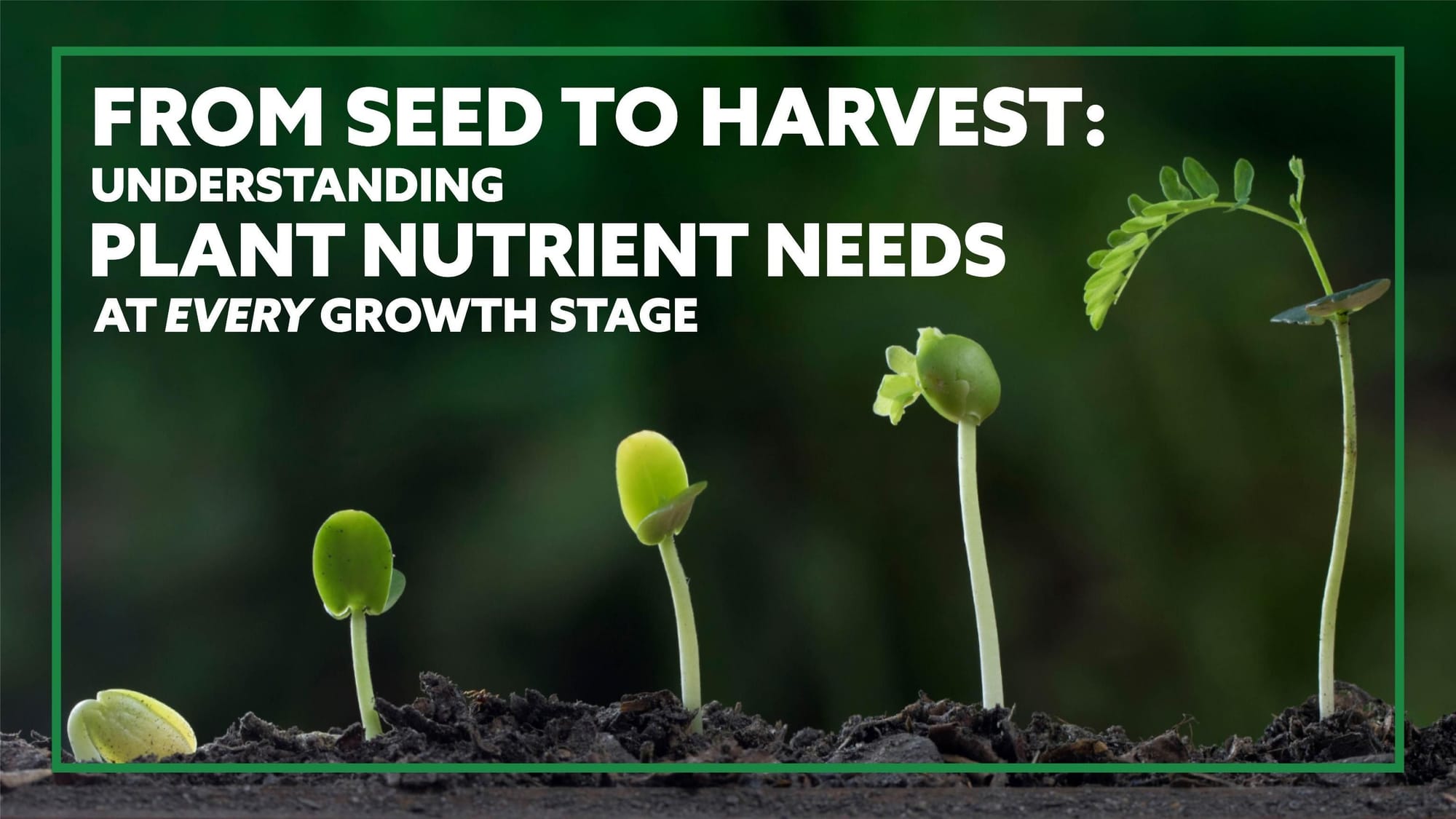
If you’ve ever wondered why your tomato plants look great one week and then suddenly stop producing, or why your basil bolted too early, the answer often lies in plant nutrition timing. Just like growing children need different foods at different ages, your plants have changing nutrient demands throughout their life cycle.
Understanding these stages helps home gardeners grow stronger, healthier plants and enjoy bigger harvests, all while using fewer resources.
1. Germination & Seedling Stage (Days 1–14)
This is the most delicate phase. The tiny seedling relies almost entirely on the energy stored inside the seed.
Primary nutrient needs:
- Minimal nitrogen (N) – too much can burn delicate roots
- Phosphorus (P) – critical for strong root development
- Potassium (K) – helps with early water regulation
What to watch for:
- Yellowing leaves or slow growth often means the seedling is struggling to access phosphorus.
- At this stage, gentle, low-dose nutrients are best. Over-fertilizing is one of the fastest ways to lose young plants.
Pro tip: Many gardeners start with a very diluted, balanced fertilizer or rely on high-quality seed-starting mix until true leaves appear.
2. Vegetative Stage (Weeks 3–8, depending on plant)
This is the “building” phase. Plants focus on growing stems, leaves, and roots. You’ll see rapid green growth here.
Primary nutrient needs:
- High Nitrogen (N) – fuels leafy green growth and chlorophyll production
- Moderate Phosphorus (P)
- Moderate Potassium (K)
Signs of healthy vegetative growth:
- Deep green leaves
- Thick, sturdy stems
- Fast new leaf production
Common mistake: Continuing to use a “bloom” fertilizer too early, which can limit leaf development and result in smaller plants overall.
Vegetables like lettuce, spinach, kale, and herbs love this nitrogen-rich phase. Tomatoes, peppers, and cucumbers also need strong vegetative growth before they switch to fruiting.
3. Flowering & Fruiting Stage (Weeks 6–16+)
This is when your garden starts delivering results. Energy shifts from leaves to flowers and fruit.
Primary nutrient needs:
- Lower Nitrogen (N) – too much encourages leaves at the expense of flowers
- Higher Phosphorus (P) – essential for flower formation and root strength
- Higher Potassium (K) – improves fruit quality, size, flavor, and disease resistance
What healthy flowering/fruiting looks like:
- Abundant blossoms
- Strong fruit set
- Rich color and flavor in vegetables
Pro tip: This is the stage where many gardeners see the biggest difference when nutrients are delivered efficiently. Plants are working hard and need consistent support without excess leafy growth.
4. Ripening & Late Harvest Stage
As fruits mature, plants begin to slow down.
Primary nutrient needs:
- Reduced overall feeding
- Continued moderate Potassium (K) for sweetness and shelf life
- Minimal nitrogen
Many gardeners ease off fertilizer in the final 2–3 weeks to improve flavor and prevent splitting.
Why Timing Matters More Than Ever
Traditional fertilizers often suffer from poor nutrient uptake — much of what you apply gets washed away or locked in the soil before the plant can use it. This leads to wasted product, runoff into waterways, and inconsistent results.
Modern agricultural science has made huge strides in precision nutrient delivery. By engineering nutrients at the nanoscale, it’s now possible to help plants absorb essential elements more efficiently and exactly when they need them most. This means stronger stems, lusher foliage in the vegetative stage, better flower set, and higher yields — all while using less product and creating less waste.
For self-sufficient families and backyard gardeners, this efficiency translates to more food on the table with less guesswork and lower costs.
Quick Growth Stage Summary Chart
| Growth Stage | Main Nutrient Focus | Goal | Example Crops |
|---|---|---|---|
| Germination/Seedling | High P, low N | Strong roots | All seedlings |
| Vegetative | High N | Leaves & stems | Lettuce, kale, basil, tomatoes |
| Flowering/Fruiting | High P + K, lower N | Flowers & fruit | Tomatoes, peppers, cucumbers |
| Ripening | Moderate K | Flavor & quality | All fruiting vegetables |
Final Thoughts
Successful gardening isn’t just about “feeding” your plants, it’s about feeding them the right nutrients at the right time. When you align your care with each growth stage, you’ll see thicker stems, greener leaves, more flowers, and tastier harvests.
Whether you’re growing in raised beds, containers, or a small backyard plot, understanding these basic plant nutrition principles gives you a huge advantage.
Have you noticed big differences in your garden when you change fertilizer timing? Which growth stage do you find most challenging? Share your experiences in the comments below!